
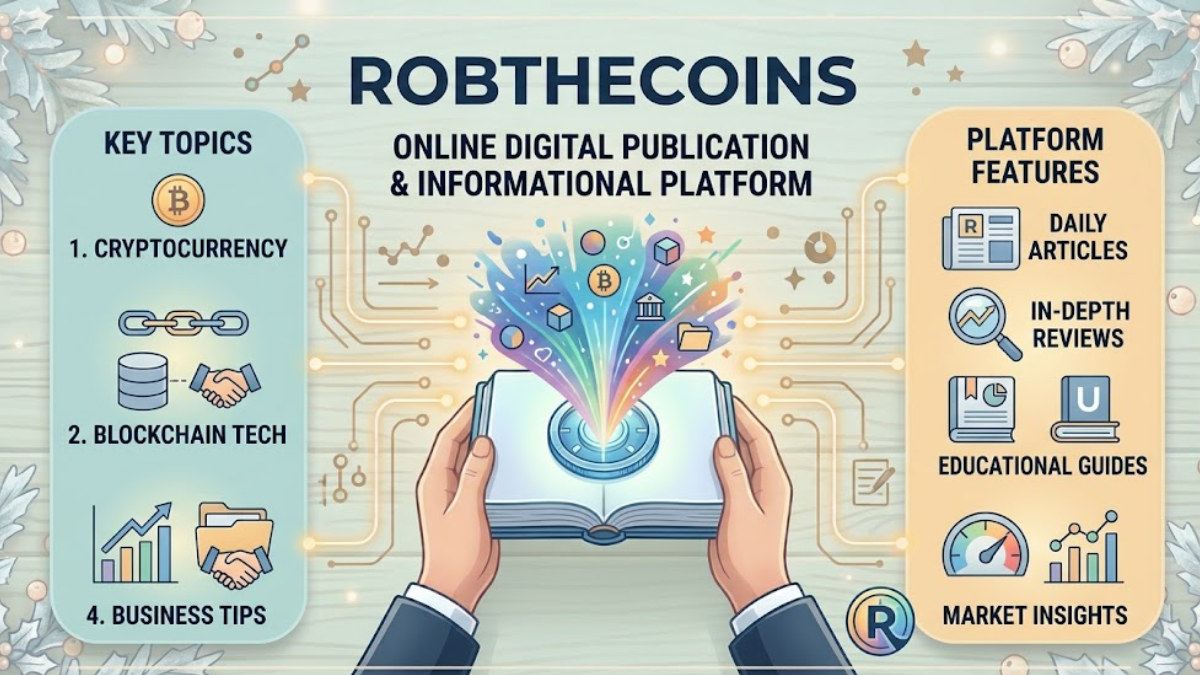
RobTheCoins explained: a complete guide to RobTheCoins investing, RobTheCoins business tips, and how to evaluate any RobTheCoins business claim safely. Practical examples included.
Introduction: Why RobTheCoins Matters Right Now
RobTheCoins is a search term that has grown quickly among people trying to learn about cryptocurrency, blockchain, and digital-asset investing. If you have typed it into a search engine, you have probably noticed something odd: the results disagree with each other. Some pages describe RobTheCoins as an educational platform for beginners. Others describe a crypto persona, a mining strategy, a blockchain, or a trading brand.
That confusion is exactly why this guide exists. Crypto is a field where unclear information costs real money. A beginner who cannot tell education from promotion, or a small business owner who cannot separate a genuine blockchain use case from hype, is exposed to avoidable losses.
This guide gives you a practical framework. You will learn how to read the different descriptions of RobTheCoins, what topics the name is most often associated with, how to approach RobTheCoins investing with discipline, which RobTheCoins business tips are worth acting on, and how to verify any claim before you commit time or capital. Throughout, the focus is on habits that work no matter which source you follow.
This article is educational and is not financial, legal, or tax advice. Crypto assets are volatile, and you can lose everything you put in.
What Are RobTheCoins? Understanding the Name Before You Trust It
The first rule of researching any crypto brand is simple: define what it is before you evaluate what it offers. Public pages about RobTheCoins do not agree on a single definition, and many of them are low-authority sites that repeat each other.
The Descriptions You Will Encounter
Based on what currently appears online, RobTheCoins is described in at least four ways:
- An educational resource that explains cryptocurrency, blockchain, and investing in beginner-friendly language, with a business-focused angle.
- A person or persona presented as a crypto thought leader or analyst.
- A mining or strategy term used in articles about extracting or acquiring digital assets.
- An early-stage blockchain or coin, which at least one exchange-published article calls unproven and speculative.
How to Handle Conflicting Definitions
When definitions conflict, treat none of them as settled. Look for a primary source: an official website, a verifiable social profile, a published team, or documentation you can check independently. If you cannot find one, assume the name is a keyword and a content theme rather than a verified product. That assumption protects you, and it still lets you learn from the topics the name attracts.
Why Crypto Education Matters More Than Ever
Digital assets have moved from a niche hobby to a mainstream conversation. Individuals ask whether to buy, small businesses ask whether to accept payments, and everyone is surrounded by confident-sounding opinions.
The Cost of Misinformation
In crypto, a bad source does more damage than in most fields. Prices move around the clock, projects launch anonymously, and promotional content is often disguised as education. A single misunderstanding about custody, fees, or taxes can erase months of gains.
What Good Education Looks Like
Quality educational content does four things. It explains concepts in plain language. It states risks as clearly as benefits. It does not promise returns. And it tells you where to verify what you have just read. Use these four tests on RobTheCoins content and on every other crypto source you follow.
Who Benefits From RobTheCoins-Style Content
The topics associated with RobTheCoins fit several kinds of readers, and knowing which one you are shapes how you should use the material.

Beginners and Curious Investors
Newcomers need vocabulary first: wallets, exchanges, private keys, gas fees, stablecoins. Beginner-friendly guides help here, as long as they stay general and do not push specific purchases.
Small Business Owners and Entrepreneurs
Owners in retail, logistics, finance, and services want to know whether blockchain tools can lower payment costs, speed up settlement, or improve record-keeping. For them, the Robthecoins business angle is about practical operations rather than speculation.
Content Creators and Marketers
Creators study the name because it is a keyword with search interest and uneven coverage. If that is you, the opportunity is to publish clearer, better-sourced material than what currently ranks.
Core Crypto and Blockchain Concepts You Need First
Before any investing or business decision, learn the building blocks. Everything else in this guide rests on them.
Blockchains, Wallets, and Exchanges
A blockchain is a shared ledger maintained by many computers rather than one company. A wallet holds the keys that prove you control your assets. An exchange is a marketplace where you buy and sell. Knowing the difference matters: assets left on an exchange are held by that exchange, while assets in your own wallet are your responsibility alone.
Volatility, Liquidity, and Market Cap
Volatility is how sharply a price swings. Liquidity is how easily you can sell without moving the price. Market capitalization is a rough measure of size. A small, illiquid coin can drop 50 percent in a day and leave you unable to exit. Large, established assets are not safe, but they are usually easier to trade.
Smart Contracts and Tokens
Smart contracts are programs that run on a blockchain and execute automatically. They power tokens, lending, and many business applications, and they carry their own risk: a coding flaw can be exploited.
RobTheCoins Investing: Principles That Hold Up
RobTheCoins investing, as a search topic, usually means learning how to approach crypto as an investor. Strip away the branding and the sound principles are the same everywhere.
Start With a Written Plan
Write down your goal, your time horizon, the amount you can afford to lose, and the conditions under which you will sell. A plan made before you are excited or afraid beats a decision made during a price spike.
Size Your Positions Conservatively
A common guideline is to keep speculative assets to a small slice of your overall portfolio. One exchange-published article on this topic suggests keeping frontier assets under about 5 percent. Treat that as one example of conservative sizing, not a rule, and set your own number based on your finances.
Diversify and Avoid Concentration
Holding a single small coin is a bet on one team and one idea. Spreading exposure across established assets, and across asset types outside crypto, reduces the damage when any one position fails.
Separate Learning From Buying
Reading about RobTheCoins, or any project, is not a reason to buy it. Give yourself a cooling-off period of several days between finishing research and placing an order.
Practical Examples: Putting Investing Principles to Work
Concrete scenarios make the principles easier to apply.
Example One: The Cautious Beginner
Maya has 3,000 dollars in savings beyond her emergency fund. She decides she can tolerate losing 300 dollars, or 10 percent, without stress. She splits that 300 dollars across two large, widely traded assets, buys in four monthly installments to avoid timing the market, and writes down that she will review the position in a year. Her plan limits her downside before she buys anything.
Example Two: The Tempting New Coin
Daniel reads an enthusiastic article about a new coin and feels the urge to buy. Instead he runs a checklist: Is there a named, verifiable team? Is there public documentation? Can he see real transactions on a block explorer? Is it listed on reputable exchanges with real trading volume? The coin fails three of four checks, so he skips it. Skipping is a legitimate investing decision.
Example Three: The Rebalancer
Priya’s crypto holdings doubled and now make up a much larger share of her portfolio than she intended. She sells enough to return to her original target. She locks in some gains and restores her planned risk level.
RobTheCoins Business Tips: What Entrepreneurs Can Actually Use
The phrase RobTheCoins business tips points to a common need: owners want practical, non-technical guidance on digital finance. Here are the tips that consistently hold up.
Start With a Problem, Not a Technology
Ask what is slow, expensive, or error-prone in your operations. Cross-border payments, supplier settlement, and proof of origin are real pain points. If you cannot name the problem, you do not need a blockchain solution yet.
Pilot Small Before You Commit
Test on a limited scale: one product line, one customer segment, or a small percentage of invoices. Measure fees, speed, and customer response, then decide whether to expand.
Keep Clean Records From Day One
Crypto transactions often have tax and reporting consequences. Record dates, amounts, values in your local currency at the time, and the purpose of each transaction. This habit saves hours with your accountant.
Manage Price Risk
If you accept crypto payments, decide in advance whether you will hold them or convert quickly to your local currency. Many small businesses convert promptly so that a price drop does not cut into margins.
Robthecoins Business: Real-World Applications of Digital Finance
The Robthecoins business theme is best understood through how businesses actually use blockchain and digital assets.
Payments and Settlement
Accepting stablecoins or other digital payments can reduce international transfer costs and delays. A freelance design studio billing overseas clients, for example, may receive funds in minutes instead of days.
Supply Chain and Record-Keeping
A shared ledger can give partners a single trusted record of where goods came from and when they moved. A food importer might use it to prove origin and handling to retailers.
Customer Loyalty and Digital Assets
Some retailers experiment with token-based rewards. These programs add compliance and customer-support work, so they suit businesses with the resources to manage them.
A Simple Business Evaluation Table
| Question | Good sign | Warning sign |
| Does it solve a defined problem? | Clear cost or time saving | Vague promise of innovation |
| Can you pilot it cheaply? | Small test is possible | Large upfront commitment |
| Is the provider verifiable? | Named company, public record | Anonymous, no documentation |
| Are regulations understood? | Advice from a qualified professional | “Rules do not apply” claims |
Risk, Security, and Due Diligence
Risk management is the most valuable skill in crypto, and it applies to every topic above.
Protect Your Accounts and Keys
Use a unique, strong password for every exchange, turn on two-factor authentication through an app rather than text messages, and never share your seed phrase with anyone. Anyone who asks for it is attempting theft.
Recognize Common Red Flags
Be cautious when you see guaranteed returns, pressure to act quickly, anonymous teams with big claims, requests to send funds to “unlock” profits, or influencers who do not disclose paid promotions. Real education rarely depends on urgency.
Verify Before You Trust
Check whether a platform is registered or licensed where it operates. Search the name together with words like “scam” and “complaints.” Look at independent reviews, not only testimonials on the project’s own pages. For any brand sharing the RobTheCoins name, confirm that the website, social accounts, and any claimed team are consistent and verifiable.
Understand the Legal and Tax Side
Regulations differ by country and change often. Before you invest meaningful money or accept crypto in a business, speak with a qualified tax or legal professional in your location.
Building Your RobTheCoins Action Plan
Knowledge matters only when it turns into steps. Here is a straightforward sequence you can follow.
A Practical 30-Day Roadmap
- Week one: Learn the vocabulary. Read about wallets, exchanges, and volatility from at least three independent sources.
- Week two: Define your goal and risk limit in writing. Decide whether you are investing, running a business pilot, or only learning.
- Week three: Practice with no money. Use a demo account or track a paper portfolio and note how you react to price swings.
- Week four: If you proceed, start small, use a reputable regulated exchange, secure your accounts, and keep records.
How to Keep Learning Responsibly
Build a short list of trusted sources, compare them against each other, and update your views when facts change. Treat every confident claim, including those found under the RobTheCoins name, as a hypothesis to check.
Frequently Asked Questions About RobTheCoins
Is RobTheCoins a verified cryptocurrency?
There is no clearly established, authoritative source confirming it as a single verified coin. Descriptions vary widely, so verify any specific claim independently before acting on it.
Does RobTheCoins provide financial advice?
Some pages describe RobTheCoins as educational rather than advisory. Regardless, you should treat any content as general information and consult a licensed professional for personal advice.
How much should I invest in crypto?
Only an amount you can afford to lose completely. Many conservative investors keep speculative assets to a small percentage of their total portfolio.
Conclusion: Turning RobTheCoins Curiosity Into Smart Decisions
RobTheCoins is a name surrounded by mixed and often unverified descriptions, which makes careful reading more important than enthusiasm. The useful takeaway is not any single claim about the name. It is the process: define what you are looking at, verify it with primary sources, plan before you act, size risk conservatively, and keep clean records.
Whether your interest is RobTheCoins investing, RobTheCoins business tips, or building a RobtheCoins business strategy around digital finance, the same disciplines apply. Learn the fundamentals, start small, protect your keys, and treat urgency as a warning sign. Do that consistently, and you will be better equipped than most people who search the same keyword.
[…] small. Complete a few tasks and test a minimum withdrawal before investing serious time. If the first payout arrives smoothly, you have real evidence. If it does not, you have […]