
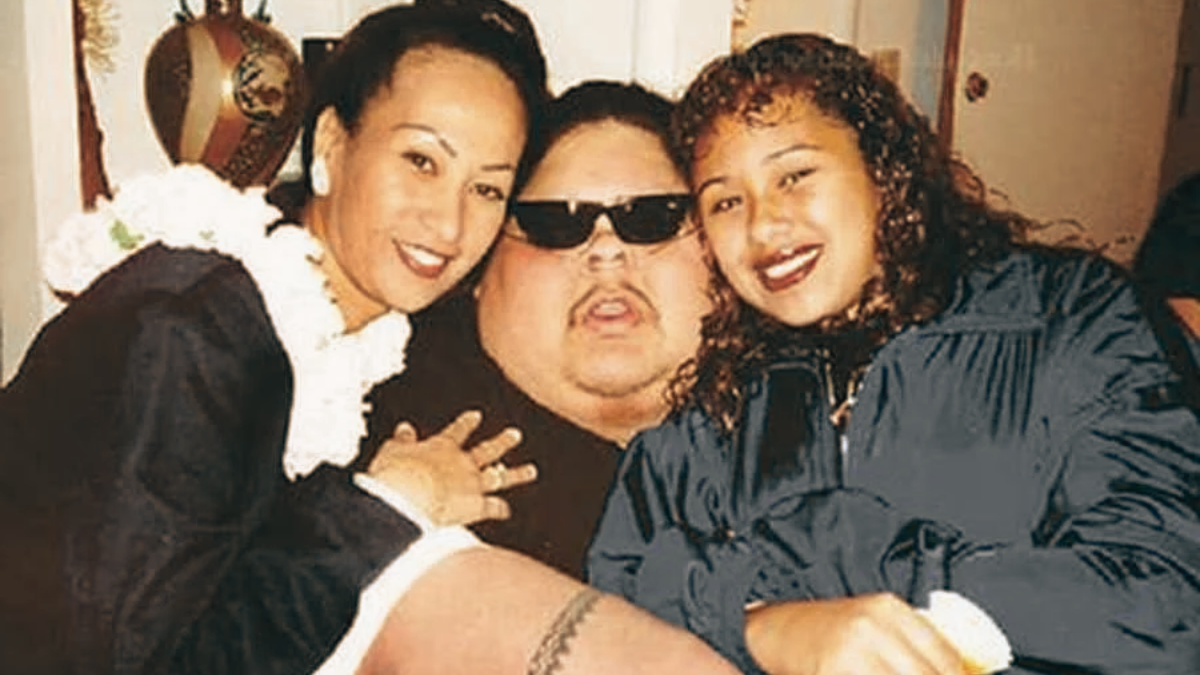
Why was ceslie-ann kamakawiwo’ole called “wanted”? Get the facts on the probation warrant story, her family, and IZ’s weight, plus how to vet celebrity-relative claims.
A note before the article: coverage of this topic is dominated by low-quality content-farm sites that contradict each other. I ran a search to build this guide. Where claims are well supported I say so, and where they are shaky I flag it. I have not presented anything as a current fact that I couldn’t back up.
Introduction: Why “ceslie-ann kamakawiwo’ole wanted” Matters
Few musicians are as beloved as Israel Kamakawiwoʻole, “Bruddah Iz.” His ukulele medley of “Somewhere Over the Rainbow” and “What a Wonderful World” is still among the most streamed Hawaiian recordings ever. When the public is that attached to an artist, interest spills over to his family, and one of the most common searches is “What is Ceslie-Ann Kamakawiwo’ole wanted for?”
The topic matters for three reasons. First, it is a case study in how a single news item gets inflated, recycled, and distorted online. Second, it involves a private person who became a public name only because of her father’s fame. Third, many top-ranking articles on this subject mix verified facts with invented biography, so readers deserve a clear, sourced answer.
This guide explains what is reliably reported about the “wanted” label, what is unverified, and what we know about the Kamakawiwo’ole family. It also answers the related questions people search: IZ’s weight, why he was so large, and what happened to his family.
What Is Ceslie-Ann Kamakawiwo’ole Wanted For?
The short answer is a probation violation, not a headline violent crime. Several sites report that she appeared on Hawaii’s “Most Wanted” list on August 7, 2016, tied to a $20,000 warrant that Honolulu police said resulted from violating the terms of Hawaii’s HOPE probation program.
HOPE stands for Hawaii’s Opportunity Probation with Enforcement. It is a supervision program built around frequent check-ins and swift, certain consequences for missed obligations. A warrant under such a program typically means the person failed to appear or comply, which is very different from being a fugitive for a violent offense. Another biography site likewise says she landed on the list because she failed to comply with the terms of her Hawaii Opportunity Probation.
Two cautions apply. The sources here are celebrity-biography aggregators, not court records or police bulletins. And the case is a decade old. I found nothing reliable showing an active warrant today, so any site claiming she is “currently wanted” without a primary source should not be trusted. One roundup describes her as “Hawaii’s Once Most Wanted,” which signals the status was past, not ongoing.
What “Hawaii’s Most Wanted” Actually Means
Hawaii’s Most Wanted is a public-awareness list, usually run alongside Crime Stoppers programs, that publicizes people with outstanding warrants. Appearing on it does not mean the person committed a notorious crime. Many entries are for probation or parole violations, missed court dates, or unpaid-fine warrants. Understanding this prevents the most common misreading of the keyword.
Who Is Ceslie-Ann Kamakawiwo’ole?
She is the daughter of Israel Kamakawiwoʻole and his wife, Marlene. She is also sometimes referred to by the nickname “Wehi” in family-related pages. One biography describes her as well known as the daughter of the late Hawaiian musician and lyricist.
Beyond that, reliable detail is thin. She does not appear to maintain a public career or a verified public profile. One site states plainly that she is not on any social media network. That is relevant for anyone searching “Ceslie-Ann Kamakawiwo’ole Instagram”: accounts using her name are likely fan pages, impersonators, or unrelated people.
Beware of the Fabricated Biographies
Some pages portray her as an opera singer, a world-touring Hawaiian vocalist, or a prominent Native Hawaiian rights activist. One article calls her an opera singer who blends Hawaiian tradition with transcendent vocal artistry, and another describes her as a prominent advocate for Native Hawaiian rights and culture. These pages read like auto-generated text, offer no interviews or citations, and conflict with the reporting about her. Treat them as unreliable.
Ceslie-Ann Kamakawiwo’ole’s Age and Birth Year
Searches for her age and birth date return inconsistent results, which is itself informative. Here is what different sites claim:
- One site says she was born in 1993 in Hawaii.
- Another says she was born in 1983 to Israel and Marlene Kamakawiwo’ole.
- A third gives 1978 as her birth year.
Three sources, three different decades-spanning answers. Without a birth record or a reputable news profile, no one should publish a precise age as fact. This guide does not either. If you need to cite her age, say that it is unverified.
Her Children, Marriage, and Net Worth
Search interest in her children, husband, and net worth is high, and the honest answer is that very little is confirmed. One page says she is married but hasn’t disclosed much about her spouse or most of her children. Another says her marital status is largely unknown to the public.
On net worth, the same source notes that she hasn’t revealed what she does for a living, making it difficult to determine her net worth. Any dollar figure you see attached to her name is a guess, typically extrapolated from her father’s fame. IZ’s earnings, estate, and any inheritance arrangements are separate questions and do not translate into a known figure for her
Practical Example: Spotting a Fake Net Worth Claim
Say a site lists her net worth as “$1.5 million.” Ask three questions. Does it cite a source such as a court filing or interview? Does it describe her actual income? Does it give a methodology? If the answer to all three is no, the number is decoration meant to capture search traffic.
Who Was Israel Kamakawiwoʻole?
To understand why the family draws attention, it helps to recall the man himself. Israel Kamakawiwoʻole was born in Honolulu on May 20, 1959. He rose to fame as a member of the Makaha Sons of Niʻihau, then as a solo artist. His 1993 album Facing Future made his gentle, soaring tenor internationally known, and his “Over the Rainbow” medley has since appeared in films, television, and commercials worldwide.
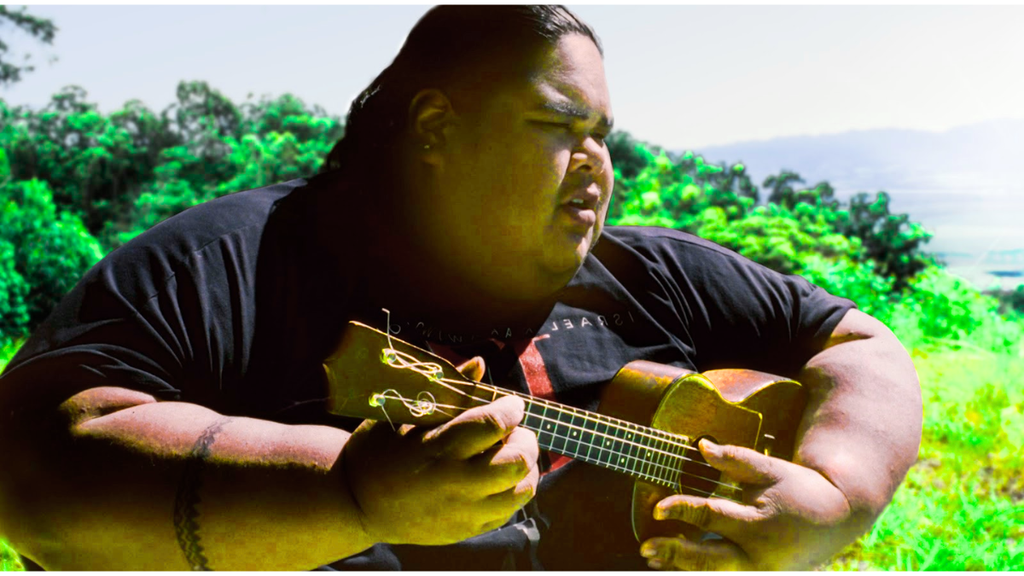
He was also an advocate for Hawaiian sovereignty and culture. Many of his songs celebrate the islands and the Hawaiian language. That cultural weight is why his death in 1997, and the circumstances of his family, remain subjects of public curiosity.
What Happened to Israel’s Kamakawiwoʻole Family?
The family experienced significant loss, much of it tied to health.
IZ himself died on June 26, 1997, at age 38 from respiratory failure linked to his long struggle with obesity. One biography confirms he died at 38. His funeral drew enormous crowds, and his casket lay in state at the Hawaii State Capitol, an honor usually reserved for dignitaries. His ashes were later scattered in the Pacific off Makua Beach.
His brother Skippy died in 1990. A biography notes her parents married the same year her uncle Skippy passed away. Skippy also struggled with weight, which feeds into the family-health story below.
His wife, Marlene, and daughter, Ceslie-Ann, survived him. They carried on as private individuals, with the daughter’s name resurfacing publicly through the 2016 wanted-list item.
If you are researching the family, the most dependable sources remain mainstream obituaries, Hawaii newspaper archives, and established music biographies, not aggregator sites.
How Heavy Was IZ When He Died?
IZ’s weight is one of the most searched details about him. Widely reported figures put his peak weight at about 757 pounds (roughly 343 kg) at around 6 feet 2 inches tall. He is commonly cited as being close to that figure near the end of his life, when his health was severely compromised.
His weight fluctuated. Reports describe periods when he lost significant weight after medical intervention, followed by regains. At the time of his death he was hospitalized, and his size complicated his care. Because exact end-of-life weights come from press accounts and not medical records released publicly, it is most accurate to say “approximately 750 pounds at his heaviest.”
Why the Number Gets Misquoted
Weight figures spread quickly and mutate. Some sources round up to 800 pounds, others cite lower figures from earlier years. When you see a specific number, check whether it refers to his peak, his weight at admission to the hospital, or an estimate from a particular year.
Why Was IZ So Large?
There is no single cause, and it would be inaccurate to reduce his size to one factor. Most accounts point to a combination:
Family history. Obesity affected multiple relatives, including his brother Skippy. This suggests a genetic and familial component, along with shared eating patterns.
Lifestyle and diet. Like many people, IZ’s eating habits and activity levels played a role, and his touring and performing schedule did not always allow for consistent routines.
Health complications. His weight contributed to respiratory problems, heart strain, and other conditions that made exercise harder, which can create a cycle where weight and health worsen together.
Limited effective treatment at the time. He attempted medical weight loss and was reportedly hospitalized more than once. Today there are more options for managing severe obesity, but in the 1990s they were fewer and less widely accessible.
Importantly, IZ’s story is often told with sympathy, not blame. Many fans see his struggle as a reminder that severe obesity is a complex medical condition, not a simple matter of willpower. If this topic raises personal health concerns, speaking with a physician is the right next step.
How to Evaluate Celebrity-Family Content Like This
The “ceslie-ann kamakawiwo’ole” search results are a useful lesson in information literacy. Use this checklist whenever you research a relative of a famous person.
Check the Source Type
Primary sources, such as police or court records and established newspapers, outrank aggregator sites. When the only support is another aggregator, the claim is circular.
Look for Internal Contradictions
As shown above, the birth years of 1978, 1983, and 1993 cannot all be correct. Conflicting basics are a red flag for the whole page.
Be Skeptical of Glowing Reinvention
Pages that turn a person with minimal public footprint into a celebrated opera singer or activist are almost always generated to capture search traffic.
Consider the Person’s Privacy
Ceslie-Ann is not a public official or performer. A decade-old probation matter is a legitimate part of the public record, but speculating about her current whereabouts, finances, or children is not appropriate or useful.
Frequently Asked Questions
Is Ceslie-Ann Kamakawiwo’ole currently wanted?
I found no reliable evidence of a current warrant. The widely repeated item dates to 2016 and concerned a probation violation.
Is she a singer?
Some sites say so, but the claims lack credible sourcing and conflict with other biographies.
Does she have an Instagram?
One biography states she has no presence on social media, so accounts using her name are suspect.
How old is she?
Unverified. Published ages vary by decades.
Conclusion
When people ask what Ceslie-Ann Kamakawiwo’ole is wanted for, the supportable answer is narrow: she was publicized on Hawaii’s Most Wanted list in 2016 in connection with a reported $20,000 warrant for violating HOPE probation. That is the extent of what the aggregator reports can establish, and I could not confirm it against court or police records. Everything beyond that, including her age, her career, her children, and her net worth, is either unknown or contradicted by competing sources.
The broader family story is better documented. IZ died in 1997 at 38 after years of health struggles that included a peak weight of roughly 757 pounds, and his legacy endures through his music. His daughter’s brief moment in the news is a footnote to that legacy, and a reminder to read celebrity-adjacent claims critically.