
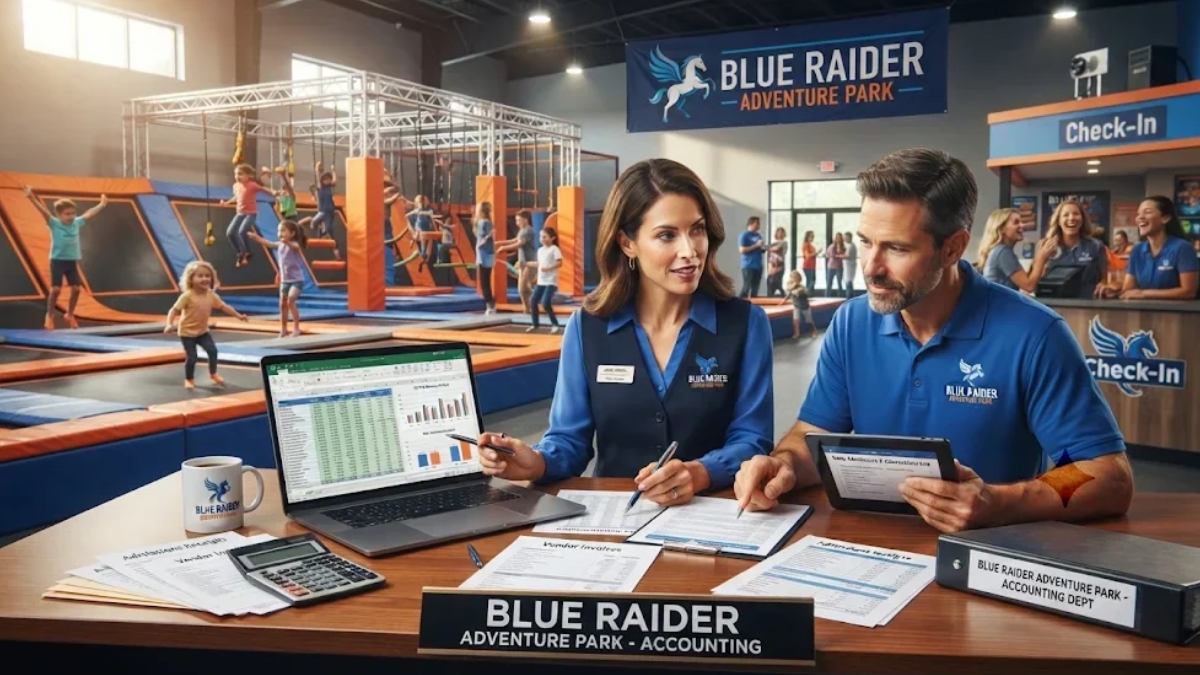
Blue raider adventure park accounting made simple. Learn how to structure revenue, payroll, seasonal cash flow, assets, taxes, and controls for an adventure park.
Introduction
Running an adventure park is part thrill, part logistics, and a large part math. Between ticket sales, season passes, birthday party deposits, concession revenue, seasonal staff, and expensive safety equipment, the financial picture can get complicated quickly. That is why blue raider adventure park accounting deserves a deliberate, well-built system rather than a spreadsheet patched together at the end of each month.
Good accounting does more than keep the tax authority happy. It tells you which attractions earn their keep, when cash will run tight, how much you can safely invest in a new course, and whether your pricing supports the business. Adventure parks face unusual challenges: revenue that swings with weather and seasons, heavy up-front capital costs, strict insurance requirements, and a workforce that expands and contracts through the year.
This guide covers the core areas of blue raider adventure park accounting, from setting up your books to reading the numbers that drive better decisions. Whether you are an owner, a general manager, a bookkeeper, or an outside accountant, you will find practical examples and checklists you can apply right away.
What Blue Raider Adventure Park Accounting Really Involves
At its simplest, blue raider adventure park accounting is the process of recording, classifying, and reporting every financial transaction the park generates. In practice, it combines several disciplines:
- Bookkeeping: Daily recording of sales, expenses, deposits, and payroll.
- Managerial accounting: Budgets, forecasts, and cost analysis for internal decisions.
- Financial reporting: Income statements, balance sheets, and cash flow statements.
- Tax and compliance: Sales tax, payroll tax, income tax, and industry-specific filings.
Why Adventure Parks Are Different
A retail store sells a product and moves on. An adventure park sells experiences, access, and time. A single guest might buy a ticket online, rent equipment, purchase lunch, and buy a souvenir. Each of those purchases belongs in a different account with different margins, tax treatment, and timing. Your accounting must separate them cleanly so you can see what is actually profitable.
Setting Up a Chart of Accounts That Fits Your Park
The chart of accounts is the foundation of all adventure park bookkeeping. A generic template often lumps everything into “Sales,” which hides the information you need most.
Recommended Revenue Accounts
- Admission and day-pass sales
- Season pass and membership revenue
- Group, school, and corporate event revenue
- Birthday party packages
- Equipment rentals
- Food and beverage sales
- Retail and merchandise
- Sponsorships and advertising
Recommended Expense Accounts
- Seasonal and full-time wages
- Payroll taxes and benefits
- Insurance (liability, property, workers’ compensation)
- Equipment inspection and certification
- Repairs and maintenance
- Utilities and fuel
- Marketing and online booking fees
- Credit card processing fees
- Cost of goods sold for concessions and retail
Practical example: If your park lumps all admissions together, you may not notice that group events generate 35% of revenue but consume 50% of staff hours. Separate accounts for each revenue stream reveal that gap, and you can adjust group pricing accordingly.
Revenue Recognition: Tickets, Passes, and Prepaid Bookings
Revenue recognition is where many adventure parks make their first accounting mistake. Cash received is not always revenue earned.
Day Tickets and Walk-Up Sales
These are the simplest. Revenue is recognized when the guest uses the attraction, typically the day of sale.
Season Passes and Memberships
A season pass sold in March for $150 should not be recorded as $150 of March revenue. Under accrual accounting, you record the cash as deferred revenue (a liability) and recognize it gradually over the season, based on the pass period or expected usage.
Practical example: Suppose the park sells 800 season passes at $150 each, totaling $120,000, and the season runs six months. You would recognize roughly $20,000 per month. In April, you debit Deferred Revenue and credit Season Pass Revenue for $20,000.
Gift Cards, Vouchers, and Deposits
Gift cards and party deposits are also liabilities until redeemed or until the event occurs. Track expired or unredeemed balances carefully, since the treatment of breakage varies by jurisdiction. Confirm the rules with your accountant.
Budgeting, Forecasting, and Seasonal Cash Flow
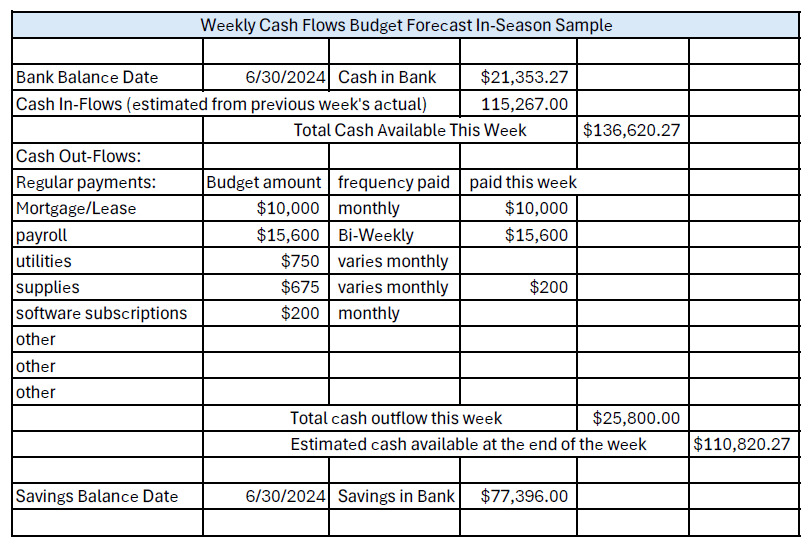
Seasonality is the defining financial feature of most outdoor parks. Revenue may spike between May and September and shrink dramatically in winter, while fixed costs like insurance, loan payments, and utilities continue.
Building a Seasonal Budget
Start with historical attendance by month, then layer in expected pricing and per-guest spending. Build three scenarios: base, optimistic, and weather-impacted. A rainy summer can easily reduce attendance by 15 to 20 percent.
Cash Flow Planning
Prepare a rolling 13-week cash flow forecast during peak season and a monthly forecast in the off-season. Many parks build a cash reserve during summer to cover winter overhead.
Key Performance Indicators to Track
- Revenue per visitor: Total revenue divided by total guests.
- Concession attach rate: Percentage of guests who buy food or drinks.
- Labor cost percentage: Payroll as a share of revenue (often 30 to 40 percent in recreation).
- Capacity utilization: Guests served compared with maximum safe capacity.
- Season pass redemption rate: How often pass holders actually visit.
Practical example: If your park earns $1.2 million in a season from 60,000 visitors, revenue per visitor is $20. If a new snack bar lifts that to $22, that is $120,000 in added revenue without adding a single guest.
Payroll and Seasonal Labor Accounting
Labor is usually the largest expense for any adventure park, and it is also the most error-prone.
Managing Seasonal Hiring
Seasonal guides, instructors, and ticket staff often work irregular schedules. Track hours accurately with a time-clock or scheduling app that feeds into payroll. Classify workers correctly as employees or contractors, since misclassification can create costly penalties.
Payroll Taxes and Benefits
Record employer payroll taxes, workers’ compensation premiums, and any benefits as separate expense lines. Workers’ compensation can be especially significant in a physical, height-related business, so allocate it by job category.
Tips and Gratuities
If guides or food staff receive tips, understand the reporting and withholding rules in your area and document them consistently.
Practical example: A park with 25 seasonal staff averaging $15 per hour over 500 hours each pays $187,500 in base wages before payroll taxes and insurance. Adding roughly 12 percent for taxes and workers’ compensation brings the real cost near $210,000. Budgeting only the base wage understates labor by more than $20,000.
Inventory, Concessions, and Retail Accounting
Food and merchandise may be a smaller part of overall revenue, but they often carry the highest margins and the highest risk of leakage.
Tracking Cost of Goods Sold
Use a simple formula each month: beginning inventory plus purchases minus ending inventory equals cost of goods sold. Compare it with sales to calculate gross margin by category.
Controlling Waste and Shrinkage
Perishable items need weekly counts. Compare actual usage with expected usage based on sales. Large gaps point to waste, portioning problems, or theft.
Pricing for Margin
A typical food service target is a cost of goods sold of 28 to 35 percent. If hot dogs cost $1.20 to produce and sell for $5.00, the cost percentage is 24 percent, which is healthy. Monitor supplier price increases and adjust menu prices before margins erode.
Capital Assets, Depreciation, and Equipment Maintenance
Ziplines, ropes courses, climbing walls, harnesses, and safety systems represent major capital investment. How you account for them affects both profit and taxes.
Capitalizing vs. Expensing
Large purchases with a multi-year useful life, like a new zipline tower, are capitalized and depreciated. Smaller or routine items, like replacement carabiners, are usually expensed. Set a written capitalization threshold, such as $2,500, and apply it consistently.
Depreciation Methods
Straight-line depreciation spreads cost evenly. Tax rules may allow accelerated deductions or special expensing provisions, so coordinate with a tax professional before year-end purchases.
Safety-Critical Maintenance
Inspections, certifications, and component replacements are not optional in this industry. Create a maintenance reserve and track repair costs by attraction.
Practical example: A $240,000 zipline course with a 15-year life depreciates at $16,000 per year. Tracking maintenance cost per attraction may show that an older ropes course now costs more to repair than it earns, a clear signal to renovate or retire it.
Insurance, Risk, and Liability Cost Management
Insurance is among the most significant fixed costs in blue raider adventure park accounting. General liability, property, umbrella, and workers’ compensation policies all apply.
Accounting for Premiums
Large annual premiums should be recorded as prepaid expenses and amortized monthly. Paying $60,000 in January does not mean a $60,000 expense in January.
Waivers and Claims Records
While waivers are legal documents rather than accounting records, tracking incidents, claims, and deductibles in your financial system helps you anticipate premium changes and identify high-risk activities.
Setting Aside Reserves
Maintain funds for deductibles and unexpected repairs. A cash cushion protects the park from a single incident wiping out a season’s profit.
Sales Tax, Income Tax, and Regulatory Reporting
Tax compliance varies widely by location, so treat this section as a framework rather than legal advice.
Sales and Admissions Tax
Some jurisdictions tax admissions, rentals, and food differently. Configure your point-of-sale and online booking system to apply the right rates to each category, and reconcile collected tax to filings every period.
Income Tax Considerations
Your entity type (sole proprietorship, LLC, S-corp, or C-corp) determines how profits are taxed. Seasonal businesses may benefit from estimated tax planning so the largest payments do not arrive during the cash-poor winter.
Records and Audit Readiness
Keep ticketing reports, bank statements, receipts, payroll records, and depreciation schedules organized and accessible. A reliable record trail makes audits and loan applications far easier.
Accounting Software, Technology, and Internal Controls
The right tools reduce errors and free managers to focus on guests.
Integrating Your Systems
The strongest setups connect the ticketing platform, POS, payroll system, and accounting software. When online bookings sync automatically with the general ledger, month-end close shrinks from days to hours.
Essential Internal Controls
- Separate duties so one person does not handle cash, record it, and reconcile it.
- Reconcile bank and credit card accounts monthly.
- Require approval for expenses above a set limit.
- Count cash drawers at open and close.
- Review voids, refunds, and discounts weekly.
Choosing the Right Reports
Review a monthly package that includes a profit and loss statement, balance sheet, cash flow statement, and attraction-level performance report. Compare each to budget and to the same month last year.
Practical example: A park notices that refunds doubled in July. A quick review shows most came from weather closures that were never communicated online. The fix, automated weather alerts and rescheduling credits, saved thousands and improved guest satisfaction.
Conclusion
Strong blue raider adventure park accounting is not about complicated formulas. It is about building a structure that reflects how an adventure park really operates: multiple revenue streams, seasonal swings, heavy equipment investment, and a labor-intensive guest experience. By designing a thoughtful chart of accounts, recognizing revenue correctly, planning cash flow around the seasons, controlling labor and inventory, and maintaining firm internal controls, you gain a clear view of where the park makes money and where it leaks it.
Start with the basics: separate your revenue streams, set up deferred revenue for passes and deposits, and create a seasonal budget. Then build up to attraction-level profitability analysis and a rolling cash forecast. If you have not already, consider working with an accountant who understands recreation or hospitality businesses, because their experience can save you far more than their fee.