

Learn how to build a research dossier for target company: sources, templates, frameworks, and examples for sales, job seekers, investors, and M&A teams.
Why a Research Dossier for a Target Company Matters
Every high-stakes business decision starts with information. Whether you are pitching an enterprise buyer, preparing for a final-round interview, evaluating an acquisition, or deciding whether to partner with another firm, the quality of your outcome depends on how well you understand the organization across the table. A research dossier for target company is the structured document that captures that understanding in one place.
Without one, research stays scattered across browser tabs, half-remembered LinkedIn posts, and unsorted notes. Teams duplicate work, miss critical signals, and walk into meetings with surface-level knowledge. With one, you get a single source of truth that is easy to share, update, and act on.
A strong company research dossier delivers three advantages:
- Relevance. You tailor your message, offer, or questions to what the company actually cares about.
- Speed. Once you have a repeatable template, new dossiers take hours instead of days.
- Risk reduction. You spot financial, legal, reputational, and operational red flags before they become expensive surprises.
This guide walks through exactly how to build one, from defining your goal to maintaining it over time, with practical examples you can adapt immediately.
What Is a Research Dossier for a Target Company?
A research dossier is a structured, evidence-based profile of an organization, compiled for a specific purpose. It differs from a generic company profile in one important way: it is built around a decision or objective. A company profile says what the business does. A dossier says what you need to know about it in order to act.
Dossier vs. Company Profile vs. Battlecard
These terms are often confused, so it helps to separate them:
- Company profile: A short, general summary of facts such as headquarters, size, and industry.
- Battlecard: A one-page competitive cheat sheet, usually used by sales teams to counter specific rivals.
- Research dossier: A deeper, multi-section document that combines facts, analysis, risks, and recommended actions.
Think of the dossier as the complete file, with the profile and battlecard as lightweight outputs you can pull from it.
Who Needs a Target Company Research Dossier
Different audiences use dossiers in different ways. Knowing your audience shapes the depth and format.
Sales and Business Development Teams
Account executives use dossiers for account-based selling. The goal is to identify decision-makers, map pain points, and personalize outreach. A dossier on a target logistics company, for instance, might highlight a recent warehouse expansion and the hiring of a new VP of Operations, which is a perfect opening for a conversation about workflow software.

Job Seekers and Career Changers
Candidates use company research to prepare for interviews, tailor resumes, and evaluate culture fit. Knowing a company’s recent product launch, leadership changes, and stated values lets you ask sharper questions than most applicants.
Investors, Analysts, and M&A Teams
For these users, the dossier doubles as an early-stage due diligence document. It covers financial health, ownership structure, litigation history, and strategic fit.
Consultants, Agencies, and Partnership Managers
Before pitching a project or proposing a partnership, these professionals need to understand the target’s priorities, constraints, and existing vendor relationships.
Define Your Objective Before You Start Researching
The most common mistake is gathering everything and organizing nothing. Before opening a single tab, write a one-sentence objective.
Examples of Clear Objectives
- “Identify three trigger events at Acme Corp that justify a cybersecurity outreach this quarter.”
- “Assess whether Beta Industries is financially stable enough to be a long-term supplier.”
- “Prepare for a product manager interview at Gamma Health by understanding their product roadmap and competitors.”
Set Scope and Time Limits
Decide how deep you need to go. A cold-outreach dossier might take 30 minutes. An acquisition dossier might take weeks. Time-boxing prevents endless research and forces you to prioritize the facts that influence your decision.
Core Components of a Strong Research Dossier
A reliable dossier follows a consistent structure. You can add or remove modules depending on your objective, but most include the following.
Company Overview
Capture the basics: legal name, founding year, headquarters, number of employees, ownership type (public, private, VC-backed), mission statement, and core products or services.
Leadership and Organizational Structure
List the executive team, board members, and key department heads. Note tenure, previous employers, and public statements. Changes in leadership are among the strongest buying and risk signals.
Financial Snapshot
For public companies, pull revenue, profit margins, debt levels, and growth trends from annual reports and filings. For private companies, rely on funding announcements, estimated revenue ranges, and hiring velocity as proxies.
Market Position and Competitors
Identify the company’s top three to five competitors, its market share if available, and its differentiators. Note whether it is gaining or losing ground.
Strategy, News, and Trigger Events
Track recent press releases, product launches, funding rounds, partnerships, layoffs, and regulatory issues. These trigger events explain why the company might need your solution or offer right now.
Where to Find Reliable Information
Quality sources make the difference between a credible dossier and a collection of guesses. Use a mix of primary and secondary sources.
Primary Sources
- Company website: Product pages, About page, careers section, investor relations, and newsroom.
- Regulatory filings: SEC filings (10-K, 10-Q, 8-K), annual reports, and equivalent filings in other countries.
- Earnings calls and investor presentations: Excellent for understanding strategic priorities in executives’ own words.
Secondary Sources
- News and trade publications: Reuters, Bloomberg, and industry-specific outlets.
- Business databases: Crunchbase, PitchBook, and similar platforms for funding and ownership data.
- Professional networks: LinkedIn for org charts, tenure, and hiring patterns.
- Review platforms: Glassdoor for culture signals, G2 and Capterra for customer sentiment.
Alternative Signals
Job postings reveal strategic direction. A company hiring ten data engineers is investing in analytics. Patent filings reveal R&D focus. Technology stack tools such as BuiltWith can show which software they already use.
Competitive Intelligence and Market Analysis
A dossier becomes truly valuable when it moves from facts to insight. Competitive analysis helps you understand where the company stands and where it is vulnerable.
Run a SWOT Analysis
Summarize strengths, weaknesses, opportunities, and threats in a simple four-quadrant format. Keep each point tied to evidence.
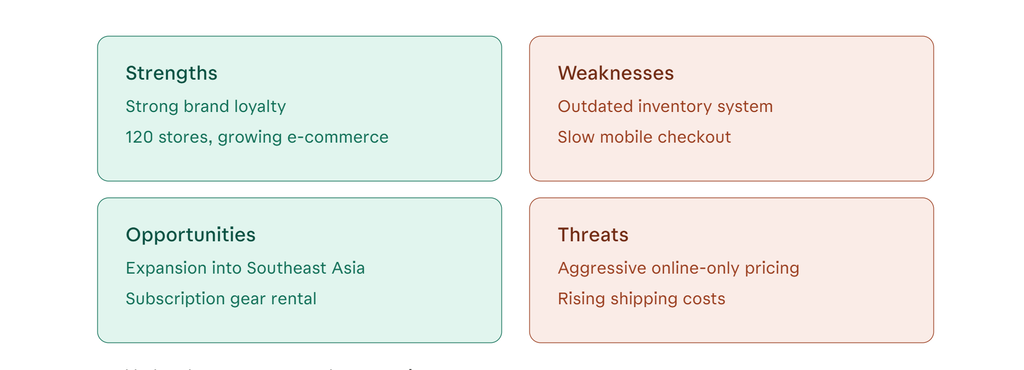
Example SWOT for a fictional retailer, NorthPeak Outfitters:
- Strengths: Strong brand loyalty, 120 physical stores, growing e-commerce share.
- Weaknesses: Outdated inventory system, slow mobile checkout.
- Opportunities: Expansion into Southeast Asia, subscription gear rental.
- Threats: Aggressive pricing from online-only rivals, rising shipping costs.
Map the Competitive Landscape
Create a simple table comparing the target against two or three competitors on pricing, product range, customer segments, and geographic reach. This quickly shows where the company is differentiated and where it is exposed.
Identifying Decision-Makers and Key Stakeholders
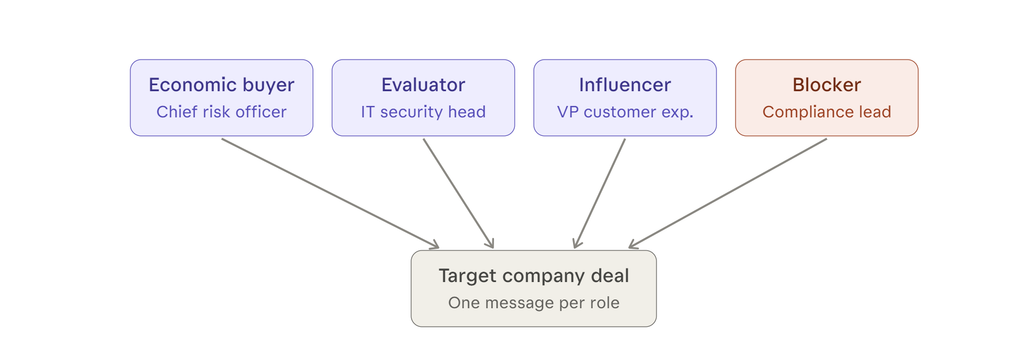
Companies do not make decisions. People do. A stakeholder map turns your research into an actionable plan.
Build a Stakeholder Map
For each key person, record:
- Name and title
- Role in the decision (decision-maker, influencer, champion, blocker, end user)
- Background and previous companies
- Public interests, such as conference talks, articles, and posts
- Best channel for contact
Practical Example
Suppose you are researching a mid-sized bank for a fraud-detection product. Your map might include the Chief Risk Officer (economic buyer), the Head of IT Security (technical evaluator), the VP of Customer Experience (influencer concerned about false positives), and a compliance manager (potential blocker). Understanding these distinct motivations lets you tailor messaging to each.
Risk Assessment and Due Diligence Checks
Especially in partnership, investment, or procurement scenarios, your dossier should flag potential risks.
Common Risk Categories
- Financial risk: Declining revenue, high debt, delayed payments, or going-concern warnings.
- Legal and regulatory risk: Ongoing lawsuits, fines, or compliance violations.
- Reputational risk: Negative press, social media backlash, or employee review patterns.
- Operational risk: Supply chain dependence, leadership turnover, or cybersecurity incidents.
Use a Simple Risk Rating
Rate each category as low, medium, or high, and add a one-line justification. This makes the dossier scannable for busy executives who need conclusions fast.
Structuring and Formatting the Dossier
Even great research fails if nobody reads it. Format for clarity and speed.
Recommended Layout
- Executive summary (five to seven lines with the key takeaways and recommended action)
- Company overview
- Leadership and stakeholders
- Financials and market position
- Competitive analysis
- Trigger events and opportunities
- Risks
- Recommended next steps
- Source list
Formatting Tips
Use headings, short paragraphs, and tables for comparisons. Include source links and dates for every major claim. Keep the executive summary at the top so readers get value in under a minute. A dossier of five to ten pages is typically enough for most commercial purposes.
Tools, Templates, and AI Prompts That Speed Up Research
Modern tools can cut research time dramatically, as long as you verify the output.
Helpful Tools
- CRM platforms (Salesforce, HubSpot) to store and share dossiers
- Sales intelligence tools (ZoomInfo, Apollo, LinkedIn Sales Navigator) for contact and org data
- Alert tools (Google Alerts, Feedly) to monitor news
- Note-taking apps (Notion, Airtable) for reusable templates
Using AI Responsibly
AI assistants can summarize filings, extract key themes from earnings calls, and draft first versions of a dossier. A simple prompt might read: “Summarize the last four quarterly earnings calls for [Company], list stated strategic priorities, and flag any mention of cost-cutting or expansion.” Always verify figures against original sources, since AI can misstate numbers or invent details.
Keeping Your Dossier Current and Actionable
A dossier is a living document. Facts go stale quickly, especially leadership, funding, and strategy.
Set a Refresh Schedule
Review active-account dossiers monthly and strategic-account dossiers weekly. Set alerts for earnings releases, executive changes, and funding news so updates happen automatically.
Connect Research to Action
End every dossier with specific next steps. Examples include “Send a personalized email to the new CTO referencing the cloud migration announcement,” or “Raise the supplier’s debt concerns with procurement before contract renewal.” Research without action is just reading.
Mini Case Study
A B2B software rep built a dossier on a regional healthcare provider. The research revealed a new Chief Digital Officer, a recent acquisition of two clinics, and job postings for integration specialists. She opened her outreach by referencing the acquisition and offering a data-integration case study. The result was a reply within a day and a discovery call booked the same week. The dossier did not just inform her message. It earned the conversation.
Conclusion
A well-built research dossier for target company turns scattered information into strategic advantage. By defining a clear objective, gathering evidence from credible sources, analyzing competitors, mapping stakeholders, assessing risks, and structuring everything for quick reading, you give yourself and your team a decisive edge in sales, hiring, investing, and partnerships.
Start small. Pick one target company, use the structure above, and time-box the first draft to two hours. Refine your template after each use, and it will become one of the most valuable repeatable assets in your workflow. The organizations that win are rarely the ones with the most information. They are the ones that organize it best and act on it first.
[…] is the defining financial feature of most outdoor parks. Revenue may spike between May and September and shrink dramatically […]
[…] of the clearest findings from my research is that quikconsole com is described with two different identities. A review-style article […]