

Why is Vicki Light in a wheelchair? Read a careful guide to Vicki Light’s illness, the MS reports, her link to Michael Nouri, her age, and what can be verified today.
Introduction: Why This Topic Matters
Search engines fill up with questions about people who are not full-time celebrities but are connected to public figures. “Why is Vicki Light in a wheelchair?” is one of them. Readers type it because they are curious, because they want to know whether someone is okay, or because they saw a passing mention of an illness and want context.
The topic matters for two reasons. First, it shows how fast speculation about someone’s health can outrun the facts. Second, a question about one person’s wheelchair use is also a way into a larger subject: multiple sclerosis (MS), how it affects mobility, and how we should talk about disability.
This guide covers what can be said responsibly about Vicki Light. One point up front: no reliable source I found confirms that Vicki Light uses a wheelchair or why. What follows separates what is documented from what is assumed, and it explains the health condition most often linked to her name.
Who Is Vicki Light?
Vicki Light is best known in connection with actor Michael Nouri. Her own IMDb biography describes more than two decades in the entertainment industry, beginning as the owner of “The Light Company,” a modeling and commercial agency in Denver, Colorado.
That background matters. Vicki Light is not only “the ex-wife of an actor.” She built a business in talent representation, a field that rewards judgment, relationships, and resilience. Searches for “Vicki Light” often skip this and go straight to her health, which flattens a whole career into a single question.
Why Her Name Gets Searched
Her name gets searched for three main reasons:
- Her past marriage to a well-known actor
- Public mentions of an illness
- Curiosity about her present life, since little current information is easy to find
Vicki Light and Michael Nouri: The Connection Explained
Most of the public footprint of “Vicki Light Nouri” comes from the actor’s biography. Michael Nouri married Vicki Light in 1986, and they divorced in 2001. Nouri is known for the film Flashdance and for many television and stage roles. Reference sites list two daughters from the marriage.

If you see “Vicki Light Nouri” as a search term, it usually refers to her married name or to this relationship. It does not necessarily mean she uses that name today.
A Note on Reliability
Some low-quality biography sites make unsourced claims about the end of the marriage. This guide does not repeat them. Claims about a private person’s personal history should come from reliable, verifiable reporting, not from content-farm pages.
Vicki Light on Wikipedia: Does She Have a Page?
“Vicki Light Wikipedia” is a common search, and it is worth answering directly. I could not find a standalone encyclopedia biography for her. The information about her appears mostly in the biography of Michael Nouri and on entertainment databases such as IMDb.
This is useful to know for two reasons:
- Absence of a page is not a red flag. Many people in the entertainment business are not notable enough for a standalone article.
- Pages that copy encyclopedia formatting can mislead. Aggregator sites sometimes imitate Wikipedia’s layout without its sourcing standards.
Treat any “wiki-style” page about her with caution unless it cites real sources.
Why Do People Ask, “Why Is Vicki Light in a Wheelchair?”
The question appears to come from a chain of connections. A reader sees that Michael Nouri has spoken or been described in connection with MS advocacy. They then search for his former wife and add “wheelchair,” because MS is widely associated with mobility aids.
That chain contains assumptions. It assumes the illness is current, that it has progressed in a certain way, and that a wheelchair is part of it. None of those has been shown in the sources reviewed for this article.
The Honest Answer
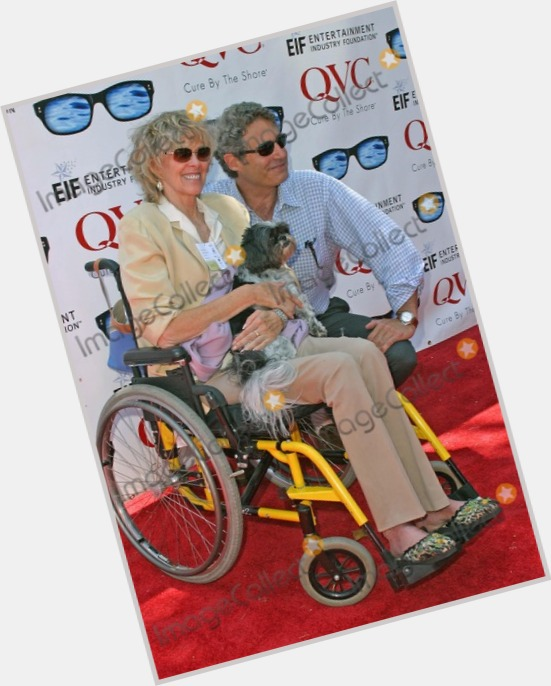
The most accurate answer to “why is Vicki Light in a wheelchair?” is this: a reason has not been publicly documented in reliable sources, and her wheelchair use itself has not been confirmed. Anyone who gives you a confident explanation is guessing or repeating rumors.
What Is Publicly Reported About Vicki Light’s Illness
The “Vicki Light illness” search does have a documented starting point, though a thin one. A biography-style trivia entry states that Nouri’s ex-wife has multiple sclerosis, and as a result he has served as an ambassador for the National Multiple Sclerosis Society.
Two cautions apply:
- It is trivia-level sourcing. It does not come from a medical record, a personal statement, or a major news interview that I could verify.
- It does not say anything about mobility. MS is a highly variable condition. Many people with MS never use a wheelchair, and others use one only at times, such as during fatigue or relapses.
So it is reasonable to say Vicki Light has been reported to have MS. It is not reasonable to say she is “in a wheelchair” or to describe a stage or prognosis.
Vicki Light and MS: Understanding Multiple Sclerosis
Because “Vicki Light MS” is a related search, a short, accurate explainer helps. MS is a chronic condition of the central nervous system in which the immune system attacks the protective coating of nerve fibers. That disrupts communication between the brain and the body.
Common Types of MS
- Relapsing-remitting MS: Flare-ups followed by partial or full recovery. This is the most common form at diagnosis.
- Secondary progressive MS: A shift in which disability builds more steadily over time.
- Primary progressive MS: Gradual worsening from the start, usually without distinct relapses.
Common Symptoms
- Fatigue, often described as overwhelming and disproportionate to activity
- Numbness or tingling
- Vision problems, including blurred or double vision
- Balance and coordination difficulties
- Muscle stiffness or spasms
- Cognitive changes such as slowed processing
Not everyone has all of these, and symptoms can change day to day. That variability is a major reason outsiders should not assume anything from one photo or one mention.
How MS Can Affect Mobility and Why Someone Might Use a Wheelchair
Since the search is about a wheelchair, it helps to understand the range of reasons a person with MS might use one. A wheelchair is a tool, and people choose it for different reasons.
Reasons People With MS Use Mobility Aids
- Fatigue management: Some people walk short distances but use a chair for outings to save energy.
- Balance and fall prevention: Falls cause injuries, and a chair reduces risk.
- Weakness or spasticity: Leg muscles may tire or stiffen quickly.
- Heat sensitivity: Overheating can worsen symptoms, and a chair can let someone conserve effort in warm settings.
- Progression of disability: In some cases, walking becomes impractical.
Practical Example
Picture two people, both diagnosed with MS twenty years ago. One walks with no aid and tires easily. The other uses a power chair full time. Their diagnosis is the same, and their daily lives are completely different. This is why “she has MS” can never be turned into “she uses a wheelchair” without direct, reliable information.
Vicki Light’s Age, Today, and Illness Updates: What Can Be Verified
Several related searches, “Vicki Light age,” “Vicki Light today,” and “Vicki Light illness update,” all ask for current facts. Here is the situation:
- Age: I could not find a verified public birth date for her. Sites that state an exact age are often estimated.
- Today: There is no reliable, recent public reporting I found on her current activities or health.
- Illness update: No verified medical update appears to exist, and no source I found documents a change in her condition.
Why Updates Are Scarce
Vicki Light is a private individual who happens to share a name with a public search term. Private people are not obliged to publish medical updates. When a person has not spoken publicly about their health, the absence of news is just an absence of news. It does not mean something is being hidden.
The Ethics of Searching for Health Information About Real People
This part of the guide matters beyond one name. Health information is among the most sensitive categories of personal data. Looking up a private person’s condition, or speculating about it online, can cause real harm.
Principles Worth Following
- Don’t diagnose from images or rumors. A person seen in a wheelchair may have any of dozens of conditions, or a temporary injury.
- Distinguish reported from confirmed. “Has been described as having MS” and “has MS, which has progressed to X” are very different statements.
- Respect consent. If someone has chosen not to share details, that choice stands.
- Avoid amplifying unsourced claims. Repeating rumors, even with a disclaimer, spreads it.
Practical Example
Suppose you read a forum comment saying a named person “lost the ability to walk because of MS.” Before sharing it, ask three questions. Who is the source? Is it firsthand? Is there any dated, verifiable statement from the person or their representative? If all three answers are weak, leave it unshared.
How to Research a Person Responsibly: A Practical Checklist
If you want to learn more about Vicki Light or someone like her, here is a workable method.
Step-by-Step Approach
- Start with primary sources. Look for the person’s own statements, official profiles, or interviews.
- Check reputable databases. Entertainment databases are useful for career facts but weaker for medical details.
- Cross-check across independent sources. One site repeating another is not two sources.
- Date everything. Health situations change, so an old mention may be outdated.
- Flag uncertainty. Note what you could not confirm instead of filling the gap.
What to Do With Unverifiable Claims
If a claim cannot be confirmed, do not present it as fact in your own writing. Say “reported” or “unconfirmed,” or leave it out. This protects both the subject and your credibility as a source.
Supporting People Living With MS
Many people who search this topic are not only curious. They may know someone with MS, or they may have been diagnosed themselves. A useful guide should point toward constructive action.
Ways to Help
- Learn the basics. Understanding fatigue, heat sensitivity, and variable symptoms prevents hurtful assumptions.
- Offer specific help. “Can I drive you to your appointment Thursday?” is better than “let me know if you need anything.”
- Respect autonomy. Ask before pushing a wheelchair or reaching for someone’s arm.
- Support advocacy. Organizations such as the National Multiple Sclerosis Society fund research and provide resources. Nouri’s reported role as an ambassador reflects how family connections can raise awareness.
- Make spaces accessible. Ramps, step-free entrances, and seating all matter.
If You Are Personally Affected
If you or someone close to you has MS symptoms or a recent diagnosis, speak with a neurologist. They can discuss disease-modifying therapies, rehabilitation, and mobility options suited to the individual. Online searching cannot replace that.
Conclusion: What We Can and Cannot Say About Vicki Light
To summarize, here is what the evidence supports about Vicki Light:
- She has a background as the owner of a modeling and commercial agency in Denver.
- She was married to actor Michael Nouri from 1986 to 2001.
- A trivia-level source reports that she has multiple sclerosis, and that Nouri became an MS ambassador in connection with this.
And here is what it does not support:
- That she uses a wheelchair
- Any reason or timeline for such use
- Any verified current age, health status, or illness update
The honest answer to “Why is Vicki Light in a wheelchair?” is that there is no reliable public record answering it. The better question is how we want to talk about illness and disability when facts are thin. The answer is with care, accuracy, and respect for privacy.
If you came here out of curiosity, the most useful takeaway may be about MS itself: it is a varied, individual condition, and mobility aids are personal tools, not a measure of someone’s story. If you came out of concern, supporting MS research and accessibility does more good than any search result.
[…] career, official social media presence, or published interviews. Many pages online pad out his biography with invented achievements. A careful guide is more useful than another page of guesses, and it is […]