
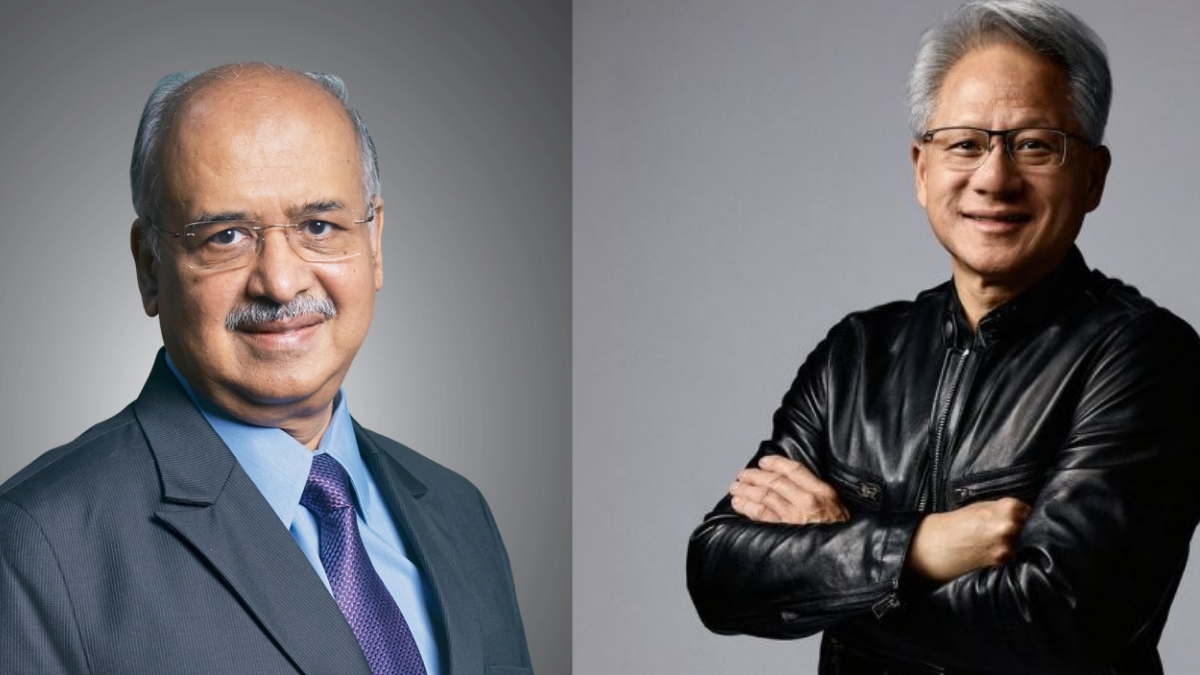
Explore a comprehensive comparison of Dilip Shanghvi and Jensen Huang. Discover their origins, leadership strategies, net worth dynamics, and answers to pressing questions regarding Nvidia stock ownership, wealth rankings, and political stances.
In the landscape of modern commerce, few success stories capture the essence of transformative leadership quite like those of Dilip Shanghvi and Jensen Huang. Operating in vastly different sectors—pharmaceuticals and semiconductor technology—both men transformed modest startup efforts into multi-billion-dollar global juggernauts that form the bedrock of critical modern infrastructure.
While Jensen Huang built Nvidia into the compute engine driving the global artificial intelligence revolution, Dilip Shanghvi established Sun Pharmaceutical Industries as one of the world’s largest specialty generic drug makers, providing affordable healthcare access to hundreds of millions. Studying Dilip Shanghvi and Jensen Huang together offers a masterclass in long-term strategic patience, crisis management, capital allocation, and visionary execution.
This guide provides an in-depth exploration of their entrepreneurial journeys, strategic playbooks, governance models, and financial milestones, while addressing key questions about their wealth, equity structures, and public profiles.
Origins and Early Vision: From Humble Beginnings to Global Dominance
The trajectories of Jensen Huang and Dilip Shanghvi demonstrate how clarity of vision in an emerging market can outpace established incumbents.
Jensen Huang: The Silicon Valley Pioneer
Born in Tainan, Taiwan, and raised partly in Thailand before immigrating to the United States, Jensen Huang earned electrical engineering degrees from Oregon State University and Stanford University. In 1993, Huang co-founded Nvidia over breakfast at a local Denny’s diner alongside Chris Malachowsky and Curtis Priem.
At the time, 3D graphics were a niche technology reserved primarily for high-end workstations. Huang envisioned a future where dedicated graphics processing units (GPUs) would revolutionize gaming and, eventually, parallel computing. Despite early near-fatal product failures—such as the NV1 chip—Huang pivoted the company toward the RIVA 128 and GeForce lines, establishing Nvidia as the standard-bearer in visual computing.
Dilip Shanghvi: India’s Pharma Visionary
Dilip Shanghvi’s story began in Kolkata and Mumbai, India. The son of a wholesale pharmaceutical distributor, Shanghvi earned a Bachelor of Commerce degree from the University of Calcutta. In 1983, recognizing that India’s healthcare market was severely underserved in chronic disease treatments, he borrowed ₹10,000 (roughly $200 at the time) from his father to launch Sun Pharmaceutical Industries in Vapi, Gujarat.
Starting with just two psychiatric products and five employees, Shanghvi made a crucial strategic choice: while most Indian drugmakers focused on high-volume, low-margin acute care (such as antibiotics and pain relievers), Shanghvi targeted chronic therapies like psychiatry, cardiology, and neurology. This focus on specialized, high-margin categories laid the groundwork for Sun Pharma’s exponential expansion across global markets.
Core Strategic Bets: Parallel Computing vs. Chronic Healthcare
Both leaders built their empires not by following existing demand, but by anticipating structural shifts decades before their competitors.
—————————————————-+
| STRATEGIC PLAYBOOK COMPARISON |
+———————————–+———————————————–+
| Feature | Jensen Huang (Nvidia) | Dilip Shanghvi (Sun Pharma) |
+———————————–+———————————————–+
| Core Industry | Semiconductors, GPUs & AI Compute | Specialty Generics & Pharma |
| Foundational Breakthrough | CUDA Architecture (2006) | Chronic Therapy Focus (1983) |
| Capital Allocation Strategy | Heavy R&D Reinvestment (~20%+ of Revenue) | Distressed Asset M&A |
| Market Expansion Model | Ecosystem Creation (Hardware + Software) | Global Regulatory Arbitrage |
+———————————–+———————————————–+
CUDA: Nvidia’s Trillion-Dollar Software Moat
In 2006, Jensen Huang made a high-stakes gamble that nearly alienated Nvidia’s Wall Street investors. He directed the company to integrate CUDA (Compute Unified Device Architecture) into every Nvidia GPU produced. CUDA allowed developers to use graphics hardware for general-purpose parallel processing.
For years, CUDA added significant silicon costs without immediate financial payback. However, when researchers like Geoffrey Hinton discovered in the early 2010s that GPUs running CUDA could train deep neural networks exponentially faster than traditional CPUs, Nvidia instantly became the sole provider of viable AI hardware infrastructure.
Specialty Generics and Global M&A: Sun Pharma’s Growth Engine
Dilip Shanghvi recognized early on that remaining a domestic drug supplier would limit Sun Pharma’s potential. Instead of relying solely on organic R&D, Shanghvi pioneered a distinct acquisition strategy: identifying distressed or undervalued pharmaceutical assets with strong product portfolios, acquiring controlling stakes, and executing operational turnarounds.
Beginning with the acquisition of Caraco Pharmaceutical Laboratories in the United States during the late 1990s, followed by Israel’s Taro Pharmaceutical Industries, and cumulative in the historic $4 billion buyout of Ranbaxy Laboratories in 2014, Shanghvi built a vertically integrated powerhouse capable of navigating complex regulatory regimes worldwide.
Wealth and Valuation Dynamics: Is Jensen Huang Richer Than Mukesh Ambani?
As Nvidia’s market capitalization surged past $3 trillion driven by global demand for AI accelerators like the H100 and Blackwell architectures, Jensen Huang’s net worth experienced unprecedented growth. This shift naturally invites comparison with Asia’s long-standing industrial magnates.
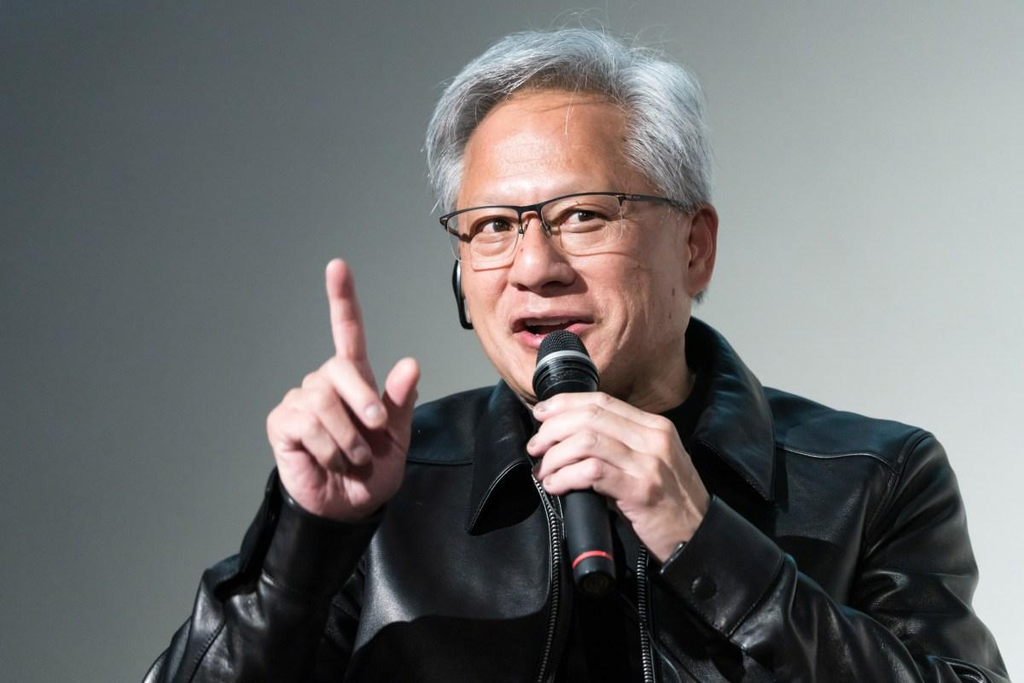
Is Jensen Huang Richer Than Mukesh Ambani?
Yes, Jensen Huang is richer than Mukesh Ambani.
Driven by Nvidia’s extraordinary stock performance, Jensen Huang’s net worth crossed $115 billion, eventually reaching an approximately $170 billion to $180 billion range. This trajectory placed Huang ahead of Reliance Industries chairman Mukesh Ambani, whose net worth has historically fluctuated around $110 billion to $115 billion.
While Mukesh Ambani’s fortune is rooted in energy, petrochemicals, telecommunications, and retail conglomerates operating primarily in India, Huang’s wealth is tightly coupled to Nvidia’s dominance over the hyper-scaling global AI ecosystem.
Equity Ownership and Capital Structure: Why Does Jensen Only Own 3% of Nvidia?
Investors evaluating Nvidia are often surprised by the founder’s percentage shareholding in the company compared to traditional business families.
+———————————————————————————–+
| NVIDIA FOUNDER EQUITY DILUTION TIMELINE |
+———————————————————————————–+
| 1993: High Founder Ownership (100% split among 3 co-founders) |
| | |
| 1993-1998: Venture Capital Rounds (Sutter Hill, Sequoia, Sega capital) |
| | |
| 1999: Initial Public Offering (Public Share Issuance Dilution) |
| | |
| 2000-2025: Global Talent RSU Grants & 10b5-1 Diversification Sales |
| | |
| Current Stake: ~3.0% – 3.5% (Valued at $100B+ due to $3T+ Market Cap) |
+———————————————————————————–+
Why Does Jensen Only Own 3% of Nvidia?
Jensen Huang owns approximately 3% to 3.5% of Nvidia’s outstanding shares. This equity stake is the deliberate outcome of corporate financing and talent acquisition strategies over three decades:
- Venture Capital Dilution: In Nvidia’s early days, the company faced fierce competition and operational setbacks. Securing early funding from venture firms like Sutter Hill Ventures and Sequoia Capital—as well as strategic survival investment from Sega in the late 1990s—required issuing significant equity to outside investors.
- Initial Public Offering (1999): Listing on the NASDAQ required issuing stock to the public to build R&D capital, further expanding the share pool and diluting founder percentages.
- Equity-Based Compensation: To attract world-class computer scientists, chip designers, and software engineers in Silicon Valley, Huang implemented competitive stock grant (RSU) programs. Expanding the share count to compensate top talent diluted the founder’s percentage, but increased the overall enterprise value.
- Planned Diversification (10b5-1 Plans): Over time, Huang has conducted modest, pre-scheduled share sales under SEC Rule 10b5-1 for personal tax liabilities and wealth diversification.
The Economic Reality: Although 3% appears modest as a percentage, 3% of an enterprise valued at over $3 trillion translates to a personal holding worth over $100 billion. Furthermore, Huang’s authority as CEO stems from his strategic execution, technical leadership, and board alignment rather than super-voting equity control.
India’s Pharmaceutical Wealth Rankings: Is Dilip Shanghvi the Richest Man in India?
Understanding Dilip Shanghvi’s financial position requires examining India’s billionaire landscape over the past decade.
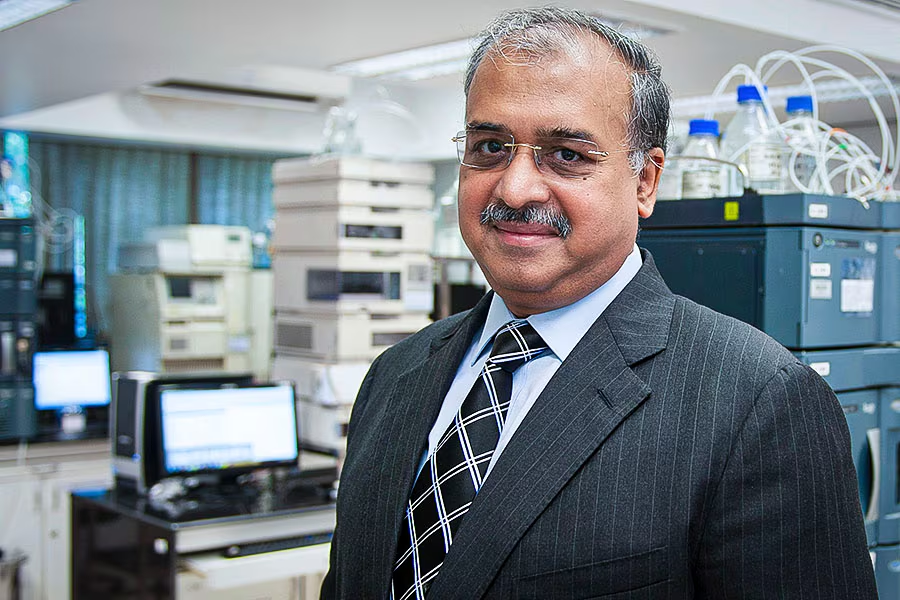
Is Dilip Shanghvi the Richest Man in India?
No, Dilip Shanghvi is not currently the richest man in India.
However, Shanghvi was briefly the richest person in India in March 2015. At that peak, a rally in Sun Pharma’s equity value propelled Shanghvi’s net worth past $21 billion, temporarily overtaking Reliance Industries’ Mukesh Ambani on real-time billionaire trackers.
Today, India’s top wealth rankings are led by industrial titans Mukesh Ambani and Gautam Adani. Dilip Shanghvi remains consistently ranked among India’s top 10 richest individuals, with an estimated net worth between $20 billion and $25 billion, retaining his status as the wealthiest healthcare executive in the nation.
Political Stances and Regulatory Relations: Is Jensen Huang a Trump Supporter?
As tech leaders navigate global supply chains and regulatory environments, executive political alignments attract scrutiny.
Is Jensen Huang a Trump Supporter?
Jensen Huang is not an explicit partisan donor or formal supporter of Donald Trump; rather, his political engagement is pragmatically aligned with tech policy and domestic semiconductor manufacturing.
Analyzing Huang’s public statements and corporate strategy reveals an approach focused on policy outcomes rather than political parties:
- Pragmatic Industry Engagement: Huang works closely with administrations regardless of party. He supported the bipartisan CHIPS and Science Act under the Biden administration to expand domestic semiconductor manufacturing, while also engaging with Donald Trump and policy teams regarding trade policies, export controls, and US competitiveness in AI hardware.
- Opposition to AI Stagnation: Huang has consistently argued against broad regulatory halts on artificial intelligence development, aligning with free-market innovation incentives that favor American technological leadership.
- Global Trade Navigation: With Nvidia facing strict US export controls on high-end AI chips to markets like China, Huang has advocated for policy frameworks that preserve national security without unnecessarily limiting commercial tech exports.
Like many Silicon Valley chief executives, Huang maintains a non-partisan, issue-focused corporate posture designed to protect Nvidia’s supply chain, R&D investments, and international market access.
Leadership Styles and Operational Frameworks
While both CEOs lead technology-intensive organizations, their internal management philosophies reflect their distinct personal styles.
Jensen Huang: Flat Architecture and First-Principles Execution
Jensen Huang’s management structure at Nvidia is famously flat. He avoids traditional hierarchical organizational layers, directly managing 40 to 50 executives.
Key elements of his approach include:
- No Formal Status Reports: Huang prefers real-time, cross-functional updates over curated executive decks.
- First-Principles Thinking: Employees are encouraged to break complex technical challenges down to basic physics and economic constraints.
- High-Accountability Culture: Meetings are open forums where strategy is debated directly, regardless of seniority.
Dilip Shanghvi: Understated Precision and Analytical Depth
In contrast to traditional corporate executives, Dilip Shanghvi is known for a quiet, analytical demeanor. He delegates daily operations to seasoned domain experts while retaining focus on strategy and capital allocation.
Key elements of his approach include:
- In-Depth Financial Modeling: Shanghvi evaluates acquisition targets personally, identifying hidden value or operational synergies others overlook.
- Low Profile, High Focus: He avoids public hype, prioritizing compliance, quality systems, and long-term earnings durability over short-term PR.
- Decentralized Execution: Sun Pharma’s business units operate with substantial autonomy, bound by centralized strategic financial benchmarks.
Navigating Geopolitical Risk and Regulatory Turbulence
Both leaders operate in sectors characterized by severe regulatory scrutiny and geopolitical sensitivity.
Semiconductor Geopolitics
Nvidia’s production relies heavily on advanced fab ecosystems, primarily Taiwan Semiconductor Manufacturing Company (TSMC). Rising geopolitical tensions and tightening US trade restrictions require Nvidia to continually adapt its product architectures (such as developing market-compliant chip variants) while diversifying its supply chain geographically.
Pharmaceutical Compliance and Global Audits
For Sun Pharma, expansion into Western markets brought increased regulatory oversight from the US Food and Drug Administration (US FDA). Managing manufacturing plant inspections, resolving import alerts, and maintaining strict Current Good Manufacturing Practice (cGMP) compliance represent ongoing operational priorities that demand substantial capital investment.
Practical Examples and Lessons for Executives
Analyzing the strategic moves of Dilip Shanghvi and Jensen Huang yields practical lessons for business leaders, founders, and investors.
1. The Long-Horizon Bet Framework (Nvidia CUDA)
- The Action: Reinvesting corporate profits into CUDA for over a decade before generative AI commercialized.
- Practical Lesson: Establish a core profit engine (gaming GPUs) that funds speculative, platform-level R&D. When a market inflection point occurs, the enterprise captures majority market share immediately because the infrastructure is already built.
2. The Distressed Turnaround Framework (Sun Pharma – Taro/Ranbaxy)
- The Action: Acquiring distressed pharmaceutical companies facing regulatory or governance crises at significant discounts.
- Practical Lesson: Value lies in underlying IP, manufacturing capacity, and distribution networks. If management can systematically fix compliance issues, acquired assets deliver exceptional return on invested capital (ROIC).
3. Equity vs. Value Optimization (The 3% Ownership Model)
- The Action: Allowing founder equity percentages to dilute in exchange for capital, talent retention, and enterprise scale.
- Practical Lesson: Owning 3% of a $3 trillion enterprise ($90B+) is far more valuable than retaining 50% of a $100 million enterprise ($50M). Focus on maximizing total value creation rather than preserving nominal equity percentages.
Summary of Core Questions
To summarize the key comparative aspects and answers addressed in this guide:
- Is Jensen Huang richer than Mukesh Ambani? Yes. Driven by Nvidia’s market capitalization growth, Huang’s net worth (~$170B+) exceeds Mukesh Ambani’s (~$110B–$120B).
- Why does Jensen only own 3% of Nvidia? Decades of venture funding rounds, IPO dilution, share issuances for employee equity compensation, and minor 10b5-1 diversification sales reduced his percentage, even as the dollar value grew exponentially.
- Is Dilip Shanghvi the richest man in India? No. While he held the #1 spot briefly in March 2015, he currently ranks among India’s top 10 richest individuals with a net worth around $20B–$25B.
- Is Jensen Huang a Trump supporter? Huang maintains a non-partisan corporate posture, focusing on pragmatically advocating for US semiconductor manufacturing, trade policy, and AI hardware competitiveness across all administrations.
Conclusion: The Enduring Legacy of Dilip Shanghvi and Jensen Huang
The stories of Dilip Shanghvi and Jensen Huang highlight how disciplined leadership, early strategic focus, and long-term execution can transform ambitious ideas into pillar companies of the global economy.
Jensen Huang demonstrated that hardware company survival requires building software platform moats (CUDA) and anticipating computing shifts decades in advance. Dilip Shanghvi proved that an Indian enterprise could build a global generic drug powerhouse through disciplined capital allocation, targeted M&A, and a focus on high-margin chronic therapies.
Whether navigating supply chain dependencies, geopolitical trade policies, regulatory oversight, or equity dilution, both leaders offer timeless blueprints for modern enterprise management. Their legacies demonstrate that true industrial leadership is defined not by short-term market movements, but by the permanent infrastructure left behind.